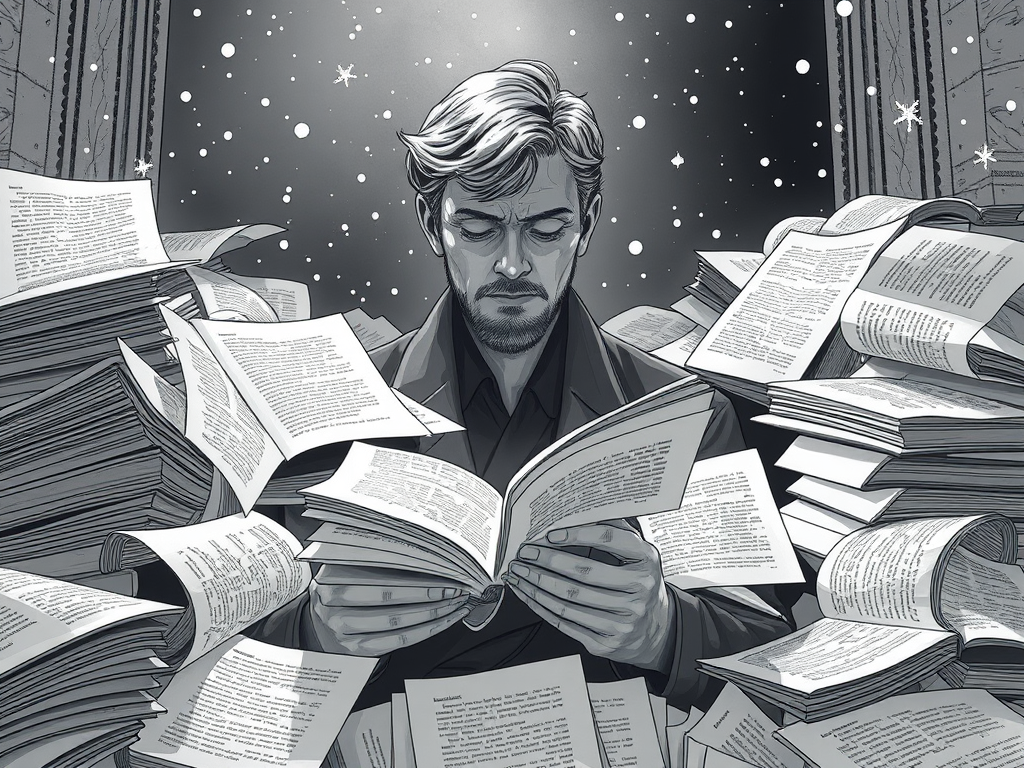
They burned Pasternak’s poems once. Not with flames, but with silence. His verses, too beautiful to be fully erased, were censored out of journals, whispered in stairwells, passed hand to trembling hand like contraband. In the cracks of empire, truth was always dangerous, but never dead.
I grew up oceans away from Russia, in a house that never mentioned its name. But I knew, somehow, that something called me there. Not to the geography, but to the ache, the sacred weight of a people who wrote with their wounds. I first met Dostoevsky like most students do, assigned reading, Crime and Punishment, the weary eyes of Raskolnikov staring into the abyss. But as I read, something shifted. He wasn’t a character anymore. He was a mirror.
What the West sometimes misses is that Russian literature isn’t about plot. It’s about soul. Dusha. The part of you that bleeds when your mother cries. The part of you that prays even when you don’t believe. The part of you that breaks and somehow becomes more human.
I read The Brothers Karamazov in the same year my family was unraveling. The house had grown quiet in the worst kind of way. My father, like Dmitri, full of rage and grief and contradiction. My sister, still too young to understand. And me, gripping the book like it could hold me together.
There’s a scene in it, Alyosha, the youngest brother, kneels by his elder’s grave as snow falls gently around him. He is mourning, yes, but more than that, he is awakening. In suffering, he finds tenderness. In death, clarity. Dostoevsky writes, “The mystery of human existence lies not in just staying alive, but in finding something to live for.”
I read that line and wept like I was in a cathedral.
And that’s the thing. Russian literature is a cathedral. Not one built of marble and gold, but of memory. Grief-warmed stone. The books are prayers, sometimes blasphemous, sometimes holy, but always honest. Tolstoy’s restless search for goodness. Akhmatova’s wartime elegies written in the lines of her face. Bulgakov’s laughter in the dark, when writing The Master and Margarita with the KGB breathing down his neck.
These writers didn’t just live under oppression, they made language their rebellion. And in doing so, they carved out something timeless for us: the knowledge that beauty matters more when it’s forbidden. That the human spirit, like Ivan Denisovich in Solzhenitsyn’s prison camp, can find warmth in the tiniest ration of bread, in a sunset behind barbed wire, in one day lived with dignity.
When I tell people I want to study Slavic literature, I often get that polite smile. The kind that says, “How poetic. But how impractical.” But what could be more necessary than understanding a people who have endured centuries of silence and still found ways to sing?
Right now, in parts of Eastern Europe, that silence grows loud again. Censorship creeps, journalists disappear, and religion is either persecuted or politicized. And still, writers write. Youth protest. Artists perform underground. I follow their stories. I see myself in their words. Not because I’ve lived their pain, but because literature teaches me how.
Words of the Steppes exists because I believe stories outlive regimes. That the pen, sharpened by pain, becomes a sword against despair. That truth, when spoken with humility and courage, can echo across borders, languages, and hearts.
So, to the reader finding this now, maybe you feel powerless in your world. Maybe you’re angry, or grieving, or just tired of pretending to care less than you do. Pick up a book written in exile. Read a banned poem. Listen to a voice that was never supposed to reach you.
And then speak.
Because somewhere, even now, someone is kneeling in the snow, waiting for a reason to rise.
Leave a Reply