Book Analysis
-

Some poems are published. Others are survived. Anna Akhmatova’s Requiem was the latter. Written during the darkest hours of Stalin’s Great Terror, Requiem was never officially penned during its time. It was memorized, line by line, by trusted friends, then burned from the page to protect the poet. Because this wasn’t just poetry, it was witness. Akhmatova was no stranger to suffering. Her ex-husband was executed, her son imprisoned, and her work banned. But she stayed. And she stood with the women of Leningrad outside Kresty Prison, waiting day after day for scraps of news, for a name, for a sentence. It’s here, in this shared silence, that Requiem was born. A Structure Like Grief Requiem is not a single poem but a cycle, a progression of numbered parts, laments, and invocations. It mirrors the structure of the Orthodox funeral service, layering public sorrow with deeply private loss. It opens not with rage but numbness: “No, not under the vault of alien skies, / And not under the shelter of alien wings — / I was with my people then, / There, where my people, unfortunately, were.” That line alone unmakes you. Akhmatova, a celebrated poet, could have left. But she chose to remain in solidarity with the broken. Her presence, her quiet witness, became its own form of protest. The Voice of the Voiceless Akhmatova doesn’t write from above. She writes among. Her speakers aren’t distant figures, they are mothers, wives, daughters. They have blue lips from standing in the cold. They have forgotten how to cry. “I learned how faces fall, / How terror can burst from lowered eyelids.” And then, in one of the most famous passages, she imagines a woman asking her if she can describe this horror, and she answers, simply: “Yes, I can.” That line is not arrogance. It’s duty. Faith and its Fractures There’s an unmistakable spiritual rhythm to Requiem. Biblical echoes, saintly figures, and prayers seep through the stanzas. But this isn’t the faith of easy answers. It’s Gethsemane faith, the kind that trembles, asks why, and keeps believing anyway. “A choir of angels glorified the greatest hour, / The heavens melted into flame.” She compares her suffering to that of Mary beneath the cross, watching the innocent die, helpless but steadfast. It’s one of the most heart-wrenching images in modern poetry: not just a poet, but a mother invoking the Mother of Sorrows. Why Requiem Still Speaks We live in a world still full of prisons, of silence, of erasure. Women still wait outside courtrooms. Artists are still exiled for telling the truth. And memory, real, raw memory, is still under threat. Akhmatova reminds us that poetry is not decoration. It is survival. It is sacred. And that sometimes, the most revolutionary act is to remember. “I will remember them always and everywhere, / I will never forget them.” She didn’t need to scream. She just needed to write. And we, we need to keep reading.
-
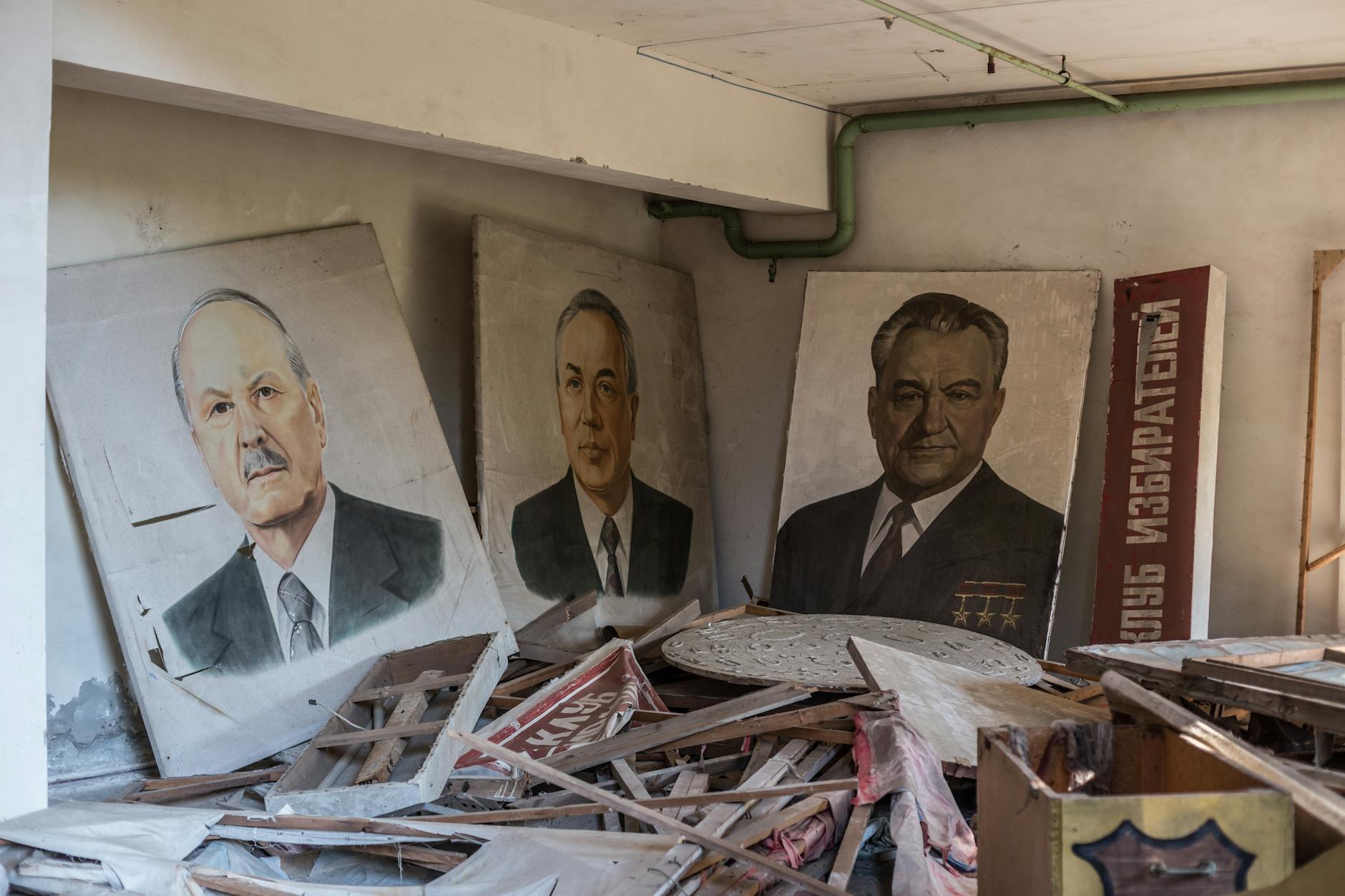
If Tolstoy gave us the sweeping epic of War and Peace, then Vasily Grossman gave us its spiritual aftermath. Life and Fate is not simply a war novel. It is a cry from the depths of the twentieth century, a century where totalitarianism on both ends of the ideological spectrum swallowed human beings whole. Grossman, once a loyal Soviet war correspondent, risked everything to write this book. When the KGB raided his home in 1961, they didn’t just take the manuscript, they took the typewriter ribbon and carbon paper, convinced this novel was more dangerous than any weapon. They weren’t wrong. Because Life and Fate does what all great literature does: it tells the truth that regimes fear. The Vast Canvas Set during the Battle of Stalingrad, the novel follows the Shaposhnikov family across camps, battlefields, science institutes, and kitchen tables. Its scope is massive, nearly 900 pages, but its heart is intimate. Grossman paints a world where state ideology has reached into every crevice of life: your thoughts, your friends, your fear, your silence. At the center is Viktor Shtrum, a physicist wrestling with loyalty to the Party and loyalty to his conscience. When he is briefly condemned and then saved by a political turn of luck, Viktor asks himself if survival is always worth the cost: “Everything that lives is unique. It is unimaginable that life hates individuality.” That line is the quiet thesis of the novel. That amidst fascism and Stalinism, amidst camps and ashes and false confessions, the most radical act is simply to remain human. Grossman’s Humanism Unlike Solzhenitsyn, whose faith gives moral clarity, Grossman offers no such dogma. He does not preach, he mourns. He observes. He writes of Jewish mothers in Nazi gas chambers, of prisoners in Soviet gulags, of soldiers who don’t know who to believe anymore. “You can’t burn ideas in ovens or bury them in mass graves.” Grossman doesn’t let the reader choose easy sides. Both Nazi Germany and Stalinist Russia are shown as mirror reflections of the same inhumanity: the crushing of the individual in the name of utopia. Yet he also finds grace. In kindness. In the decision not to betray. In the look exchanged between strangers who know they are not supposed to care, and care anyway. Why Life and Fate Matters This is not an easy novel. It demands endurance. But it rewards that endurance with clarity. In a world where political tribes demand total allegiance, where ideology often trumps empathy, and where truth is either censored or commodified, Grossman’s voice remains startlingly modern. His message? That totalitarianism is not just a political system. It is a war against love. Against free thought. Against tenderness. And that history may repeat itself, but so does resistance. “There is no punishment that can destroy the soul.” Life and Fate is not a novel you read and forget. It’s a novel that alters your posture toward the world. You sit differently afterward. You listen more closely. You begin to ask questions you’d been trained not to ask. And maybe that’s what makes it dangerous.
-

Before Orwell wrote 1984 or Huxley dreamed up Brave New World, there was We. Yevgeny Zamyatin’s We is the dystopia that birthed them all. Written in 1921 and banned in the Soviet Union before it could even be published, the novel prophesied a future where freedom is not outlawed by force, but by logic. And what makes We so chilling is not how…
-

There are books that entertain. There are books that provoke. And then there are books that quietly walk into your life and rearrange everything you thought you knew. The Death of Ivan Ilyich is the last kind. Written in 1886, just a few years after Tolstoy’s own spiritual crisis, this novella is slim in pages but vast…
-

Mikhail Bulgakov’s The Master and Margarita is not a novel you read. It’s a novel that happens to you. Chaotic, prophetic, and darkly playful, it feels less like fiction and more like revelation, an experience where truth slips through satire and the sacred waltzes with the profane. And for those of us born into a world that…
-

In the shadowed corridors of 20th-century Russian literature, Anna Akhmatova’s Requiem stands like a candle held in trembling hands, fragile, yet impossibly resistant to extinction. Composed not in ink, but first in memory, whispered from mouth to mouth, Requiem is not just a poem. It is a monument. A dirge. A survival. Written over three decades (1935–1961) and only…
-

There are few books that leave you feeling like you’ve truly walked in someone else’s shoes, but Crime and Punishment does exactly that. From the moment Rodion Raskolnikov walks the streets of St. Petersburg with murder in his heart, you are thrust into the depths of a mind at war with itself. It’s dark, it’s…